
Spotted Lanternflies
They're beautiful...but watch out!
They're beautiful...but watch out!

You'll be amazed by their unique beauty, but beware, their JUMP will catch you off guard! Adult spotted lanternflies can certainly fly, but you'll usually notice this sequence:
Sit on a tree or fence.
Suddenly jump.
Glide or make a short flight.
Land on another tree or object.
So they're really jumpers that can also fly, rather than strong long-distance flyers.
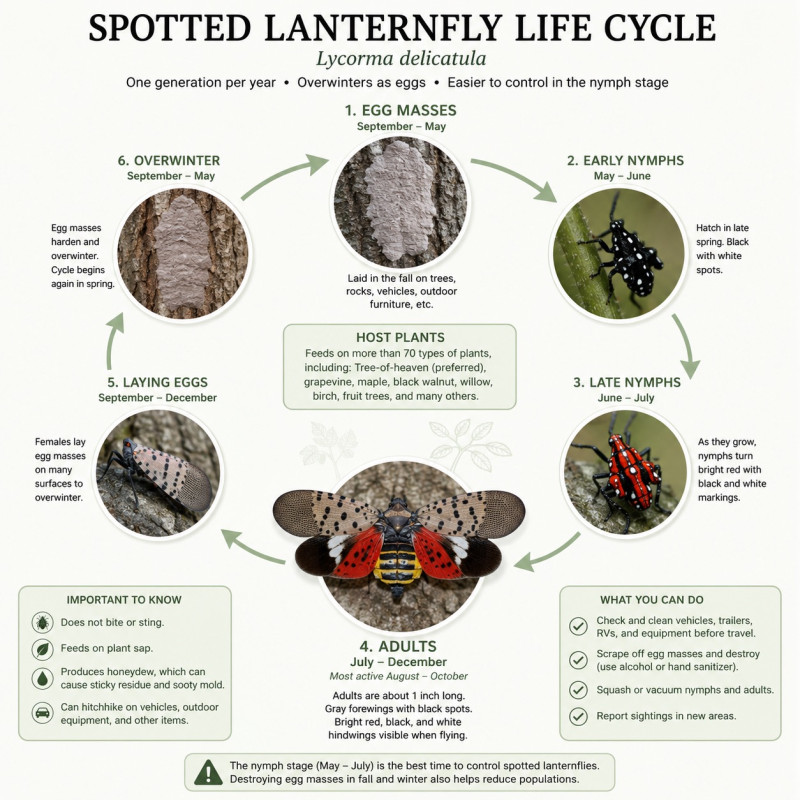
The lanternfly changes appearance as it grows:
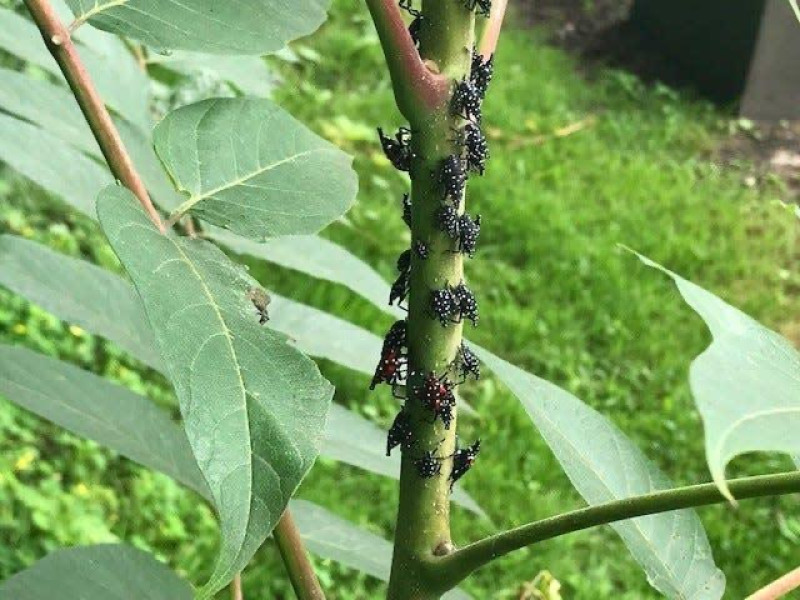

They don't bite people or pets, but they can seriously damage plants by feeding on sap. Also, they can overtake office buildings or sidewalks, making it very difficult to try to walk around them as they're everywhere! And they Jump...watch out!
Plants they commonly attack include:
Heavy infestations can:
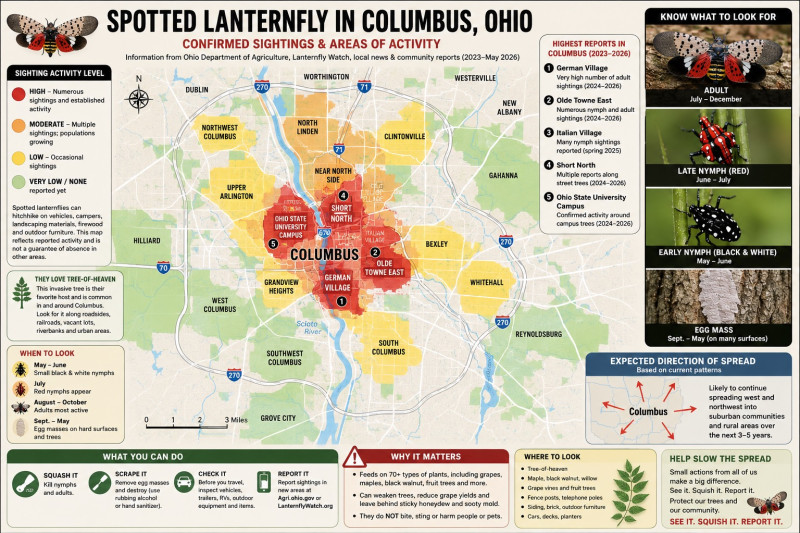

Spotted lanternflies have established populations in several eastern and northeastern Ohio counties and continue to spread westward through accidental transport on vehicles, campers, landscaping materials, firewood, and outdoor equipment. New detections occur each year as they expand their range.
Here is a current map of where the activity has been mostly established in Columbus, Ohio.
Over the past two years, sightings have become much more common in central Columbus. Based on reports from local news, the Ohio Department of Agriculture, and community observations, these are the areas where they've been reported most frequently:
These areas all have mature trees and, in many cases, populations of Tree-of-heaven, the lanternfly's favorite host tree.
They've also been reported throughout Franklin County, and because adults can fly short distances and egg masses hitchhike on cars, campers, landscaping materials, and outdoor furniture, experts expect them to continue spreading into suburbs such as:
Most suburban populations are still smaller than those in the urban core, but sightings are increasing each year.
You're most likely to find them:
Adults are especially noticeable from August through October, while the small black-and-white nymphs begin appearing in May.
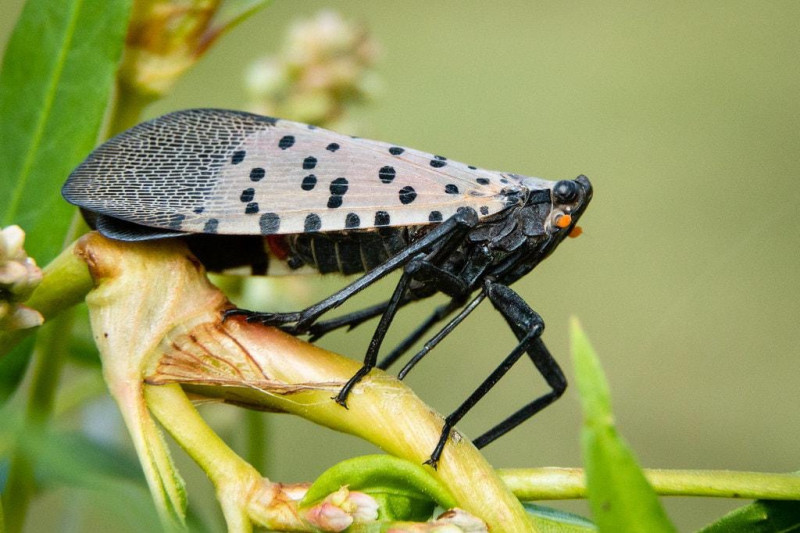
The interesting things about the Lanternfly, which you'll notice right away if you come up to one, is that they jump!
They are a type of planthopper —it describes what these insects live on and how they move.
Like grasshoppers, planthoppers have:
Jumping is often:
Adult spotted lanternflies can certainly fly, but you'll usually notice this sequence:
So they're really jumpers that can also fly, rather than strong long-distance flyers.

Need to ID a pest? Let us help identify your pest by sending us an image. Receive a free quote by filling out our online form today!
Get Started